



Design Trends for 2027: Where Design Is Heading and What It Means for Business
Dozens of new design trends emerge every year.
New colors. New fonts. New styles. New ways of creating websites, brand identities, and advertising materials. Some vanish after a few months. Others endure, gradually becoming part of the way we work.
2027 promises to be an interesting year precisely because of this distinction.
Artificial intelligence is already part of designers’ daily lives and continues to transform the creative process. At the same time, an increasing amount of visual content is starting to look the same. This creates an interesting paradox: the easier it becomes to create a design, the harder it becomes to create something that truly stands out.
That is why we expect 2027 to bring less interest in design for design’s sake, and more focus on the idea, character, utility, and how the design serves a specific business.
Here are what we believe will be some of the key trends in 2027:
1. More character, less cookie-cutter design
In recent years, we have seen a vast amount of visual content that looks good but lacks distinctiveness.
Smooth gradients, minimalist interfaces, standard illustrations, and AI-generated images—all of these are easily accessible and can be created in very little time. The problem is that when everyone uses the same visual techniques, those techniques cease to be distinctive.
That is why we expect more brands to seek out their own unique character in 2027.
Bolder typographic choices. More textures. Illustrations with a unique, personal touch. A photograph that looks real rather than perfectly generated. More details specific to the brand itself.
This does not mean that minimalism will disappear.
We are more likely to see a more meaningful minimalism, where every element has a specific role.
2. AI will be part of the process, but it won’t be the process itself
It is likely pointless to talk about design in 2027 without discussing AI. The question is no longer whether designers will use artificial intelligence; they are already using it. The more interesting question is *how*.
AI can assist with research, idea generation, creating variations, image processing, and many other tasks. This allows designers to experiment more quickly and devote more time to the concept and solving the actual problem.
However, there is a crucial difference between using AI as a tool and letting AI make all the design decisions.
By 2027, creating something visually impressive will become increasingly easy.
It will become increasingly difficult to create something meaningful.
This is precisely where human judgment will become even more important.
A designer must understand the business, the audience, and the context. They need to be able to distinguish between what actually works and what merely looks interesting.
3. Typography will play an increasingly important role
Typography is once again becoming a key tool for establishing character.
This is particularly evident in web design, where large headlines, strong size contrasts, and well-chosen typography can define a page’s entire atmosphere with little to no need for additional graphics.
In 2027, we expect to see more brands using typography as a primary visual element. There is a practical side to this, too: good typography can be striking while keeping the site fast, readable, and user-friendly.
That is precisely the crucial distinction between a trend and good design.
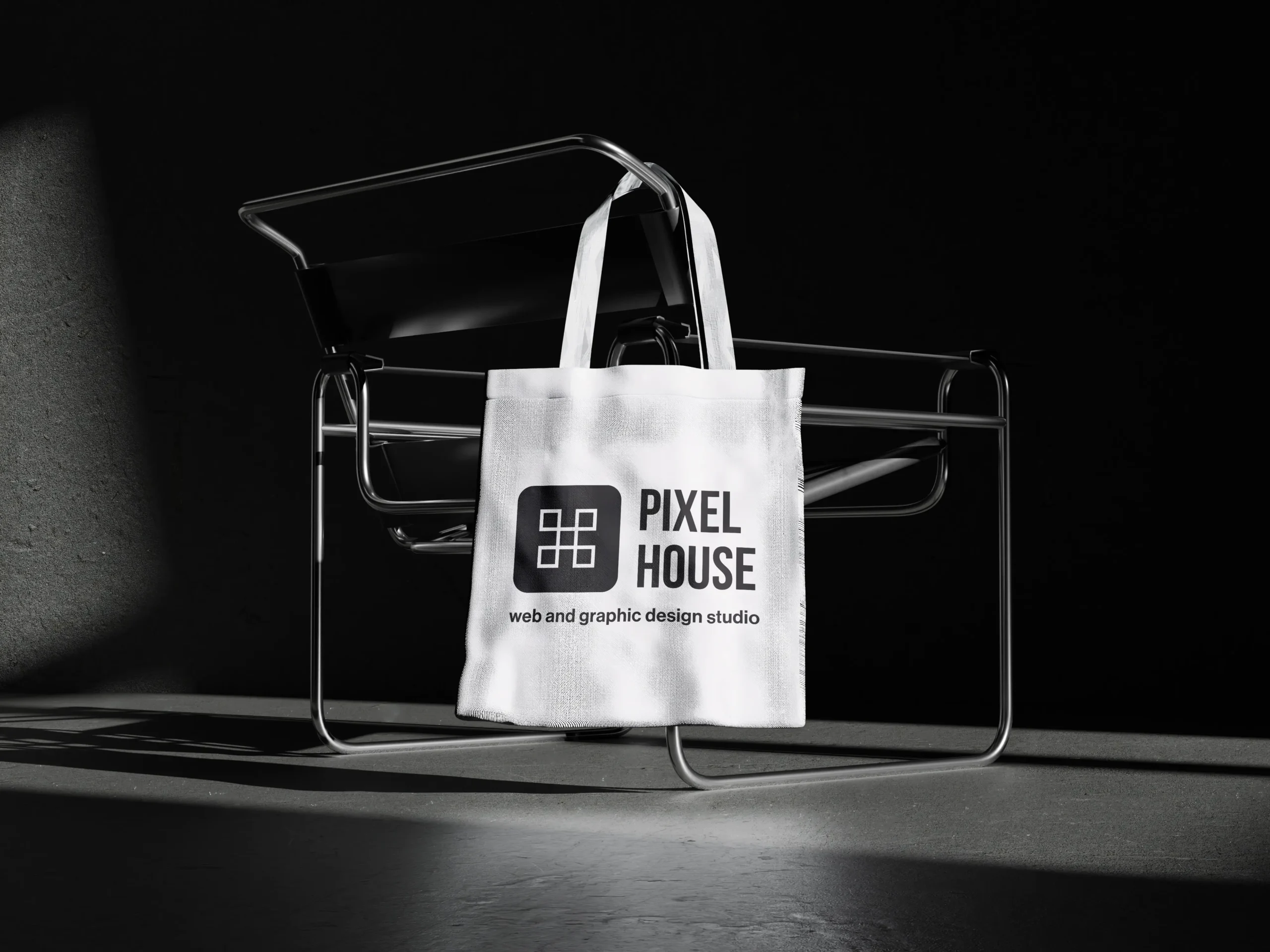
Here is an example of the bold use of typography, contrast, and distinctive graphic elements in modern brand identity:
4. Less decorative animation, more purposeful movement
Animation is a wonderful tool.
But only when it serves a specific purpose.
In recent years, many websites have used motion almost everywhere—fading elements, parallax effects, constantly moving images, and various interactive features. While this might look impressive during a first visit, if the movement slows down the site or hinders users from finding the information they need, it works against the design. That is why we anticipate a quieter, more thoughtful approach to motion design in 2027.
Animation will be used when it helps users understand the interface, guides their attention, or reinforces the brand identity.
Not simply because we *can* add it.
5. Websites will need to work for both humans and AI
We believe this is one of the trends that will have the greatest impact on business. Until recently, a website’s primary goal was to be understandable to visitors and well-indexed by search engines. Now, an additional layer has been added: AI systems must also be able to understand what a company offers, who its services are for, and what sets the business apart.
This means that clear content, sound structure, and well-organized information will become increasingly important.
A beautiful website is no longer enough.
- It must be easy to understand.
- It must answer real questions.
- It must clearly showcase the company’s expertise.
- And it must build trust—both with the visitor and in how the content is interpreted by AI systems.
6. Authenticity will become a competitive advantage
This is perhaps one of the most interesting changes. AI makes creating a perfect image incredibly easy. Yet, precisely for this reason, authentic photos, real stories, and a human touch may become more valuable. People want to know who is behind a business.
- How the product is made.
- Who the team members are.
- What the actual work looks like.
- What the people behind the brand think.
In 2027, we expect more companies to use authentic content rather than relying entirely on picture-perfect visuals.
This is particularly important for small and medium-sized businesses.
- They shouldn’t look like just another company on the internet.
- They need to look like themselves.
7. Design will be increasingly linked to business results
We believe this trend is far more important than any specific visual style. Customers will increasingly ask more than just whether a website looks good.
- They will ask if it works.
- Whether people find the information they need.
- Whether they are receiving more inquiries.
- Whether the product stands out on the shelf.
- Whether the new visual identity helps position the company better.
This also changes the role of the designer.
Design should not be separate from the business; it must be part of the solution.
8.Accessibility will be an integral part of good design, not an afterthought.
Good design should be user-friendly for as many people as possible.
This means sufficient contrast, good readability, clear navigation, logical structure, and interfaces that do not rely solely on visual cues. By 2027, we expect accessibility to become an increasingly natural part of the digital product creation process.
This does not mean designers will have to compromise on aesthetics.
Quite the opposite.
The best solutions will be those that combine a distinctive visual identity with an effortless and enjoyable user experience.
9. Less visual noise
This trend might seem paradoxical given all the talk about bolder designs. However, bold design does not mean cluttered design. We expect more brands to reduce visual noise and let the most important elements speak for themselves.
- Clearer hierarchy.
- Better contrast.
- Fewer unnecessary elements.
- More whitespace.
- Greater focus on content.
This is particularly important for websites, where a user needs to grasp a business’s value proposition in seconds.
10. Physical design will become even more important
Interestingly, the more our lives shift to the digital realm, the more special the physical experience can become. Packaging, paper quality, texture, materials, print finishes, and fine details can give a brand a tangible quality that is hard to replicate on a digital screen. This is one of the reasons we anticipate greater interest in high-quality packaging design and a more thoughtful approach to the use of printed materials.
At a time when much of the content we see online can be created in seconds, a physical product can offer something very different.
A genuine experience.
What won’t work as well in 2027?
Not every trend is worth following. In our view, certain visual techniques will begin to lose their value precisely because they are overused.
This includes the excessive use of AI-generated images lacking a unique concept, purely decorative effects that serve no function, complex animations that slow down the site, and visual solutions that look impressive but fail to help the user.
We are already seeing signs of fatigue regarding generic AI content and designs that look like they all came from the same template.
This doesn’t mean these tools will disappear.
It means that *how* we use them will become more important than the tools themselves.
What does all this mean for business?
The biggest mistake would be to view these predictions as a checklist of things to add to your brand.
Not every business needs oversized typography.
Not every website needs to be interactive.
Not every product requires bold packaging.
And not every brand needs to use AI.
The right question is different.
What will help your business become more recognizable, understandable, and useful to its customers?
That should be the starting point.
Design comes next.
Our forecast for 2027
If we were to summarize everything in a single sentence, we would say this:
In 2027, good design will be less about trends and more about character, clarity, and meaning.
AI will make creating visual content faster. Technology will continue to change the way we use websites and digital products. But this won’t diminish the need for good design.
Quite the opposite.
When anyone can create something beautiful, the real value will lie in creating something *right*.
- Something with a clear concept.
- Something recognizable.
- Something that works for both people and business.
And perhaps that will be the most important design trend of 2027.
To stop designing for the sake of design and start designing with a clear purpose.


